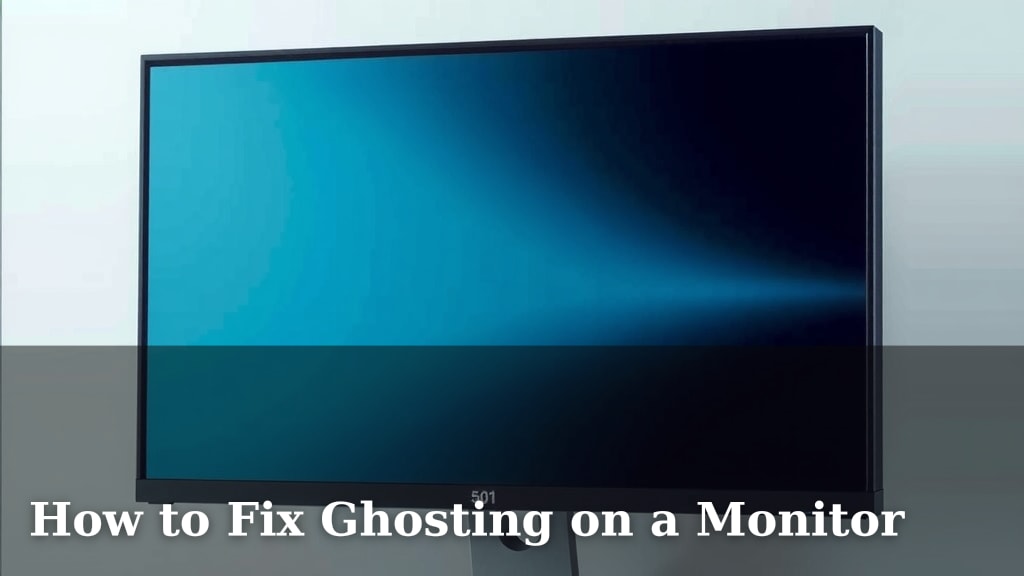
How to Fix Ghosting on a Monitor
The easiest way to fix ghosting on your monitor is to check your cables and connections. Loose or damaged cables are the most common cause of this annoying screen issue. You might also need to update your graphics driver or adjust your monitor’s settings. Don’t worry, this is usually a fixable problem!
Ghosting, sometimes called image persistence or screen burn-in, makes it look like an old image is faintly visible on your screen. This can happen for a few reasons, from hardware glitches to software problems. Thankfully, many of these issues are fairly simple to resolve yourself without needing professional help. We’ve found that a few key steps often do the trick.
- Check your monitor’s cables and connections first.
- Make sure your graphics card drivers are up to date.
- Try adjusting your monitor’s built-in settings.
- Rule out software or game-specific issues.
- Consider if your monitor might be failing.
Below, we’ll walk you through the most effective methods to get your monitor looking sharp and ghost-free again. Let’s get your display back to its best!
“`htmlTackling Monitor Ghosting: Your Step-by-Step Guide
We understand how frustrating monitor ghosting can be. That faint, lingering image can disrupt your work or gaming. Don’t worry, though. We’ve found many common causes are quite fixable with a few straightforward steps. Let’s dive in and get your display looking crisp again.
Checking Your Connections: The First Line of Defense
Before we get too deep, let’s start with the simplest things. Often, ghosting issues stem from loose or damaged cables. Think of it like a garden hose; if it’s not connected properly, you get a dribble, not a strong flow. Your monitor’s signal needs a solid connection.
Inspect Your Cables and Ports
First, power down your monitor and computer. Then, gently unplug both ends of your video cable (HDMI, DisplayPort, VGA, or DVI). Check the cable for any visible kinks, fraying, or bent pins. A damaged cable is often a culprit. Inspect the ports on both your monitor and your graphics card as well. Look for any dust or debris that might be obstructing a clean connection.
Reseat Everything Securely
Once you’ve inspected the cable, plug it back in firmly at both ends. You should feel a satisfying click or snug fit. Don’t be afraid to apply a little pressure. Sometimes, a cable just needs a good push to re-establish a solid connection. If your monitor has screws to secure the cable (common with VGA or DVI), tighten them gently.
Try a Different Cable and Port
If reseating doesn’t solve the problem, the cable itself might be faulty. If you have a spare, try swapping it out. Also, if your graphics card or monitor has multiple available ports, try using a different port. This helps you **rule out a bad port** as the source of the ghosting. Many experts suggest this as a quick diagnostic step.
Graphics Driver Updates: Keeping Your Software Sharp
Your graphics card drivers are like the translators between your computer’s commands and what your monitor displays. Outdated or corrupted drivers can lead to all sorts of visual glitches, including ghosting. Keeping them updated is essential for optimal performance.
How to Update Your Graphics Drivers
The process is fairly simple. You’ll need to identify your graphics card model. You can usually find this in your system information or by checking your computer’s documentation. Then, visit the website of your graphics card manufacturer (NVIDIA, AMD, or Intel). Download the latest drivers for your specific card and operating system. Run the installer and follow the on-screen prompts. Many installers offer a “clean install” option, which is recommended to remove old driver files.
When to Roll Back Drivers
While updates are usually good, sometimes a new driver can introduce new issues. If ghosting started *immediately* after a driver update, you might consider rolling back to a previous version. You can typically do this through your system’s device manager. Many users find this helps resolve newly introduced display problems.
Adjusting Monitor Settings: Fine-Tuning Your Display
Your monitor itself has settings that can affect image quality. Some of these can be tweaked to reduce or eliminate ghosting. These settings are usually accessed via buttons on the monitor itself or through on-screen display (OSD) menus.
Overdrive Settings and Response Time
Many modern monitors have an “Overdrive” or “Response Time” setting. This feature speeds up how quickly pixels can change color. While it can reduce motion blur, setting it too high can sometimes cause “inverse ghosting” or artifacts. Try adjusting this setting. You might want to cycle through the different levels (e.g., Off, Low, Medium, High) to see which works best for your display. We found that finding the right balance is key.
Picture Mode and Color Settings
Different picture modes (like “Movie,” “Game,” or “Standard”) can alter contrast and color saturation. Sometimes, a particular mode might exacerbate ghosting. Try switching between modes to see if one looks better. Adjusting brightness, contrast, and sharpness can also help, though these are less likely to be direct causes of ghosting. It’s worth experimenting to see what improves the image.
Checking for Monitor Firmware Updates
Less common, but still possible, is that your monitor’s firmware might need an update. Check your monitor’s manufacturer website for support and firmware downloads. This is typically a more involved process, so consult your monitor’s manual carefully if you decide to pursue this. It’s generally a good idea to ensure your hardware is running its latest stable software.
Isolating the Issue: Software or Hardware?
Sometimes, ghosting isn’t a general monitor problem but specific to certain applications or games. This helps narrow down where the problem might be originating.
Test with Different Applications and Games
Does the ghosting appear in just one game? Or does it happen across all programs, including your desktop and web browser? If it’s only in one specific application, the issue might be with that software’s settings or a bug within it. Try adjusting the graphics settings within that application. If it happens everywhere, it points more towards a hardware or driver issue.
Consider Screen Burn-In vs. Image Persistence
It’s important to understand the difference between temporary image persistence (common ghosting) and permanent screen burn-in. Image persistence usually fades over time or with a static screen saver. Burn-in is permanent damage, often from leaving a static image displayed for too long, especially on older CRT or OLED displays. For typical LCD monitors, what most people call ghosting is usually image persistence, which is fixable. Permanent burn-in is much rarer and often unfixable (Mayo Clinic).
When to Consider Professional Help or Replacement
If you’ve tried all the steps above and the ghosting persists, it might be time to consider other possibilities. It’s frustrating, but sometimes hardware does fail.
Check Your Monitor’s Warranty
If your monitor is relatively new, it might still be under warranty. Contact the manufacturer to see if ghosting is covered. They may offer repair or replacement services.
When Your Monitor Might Be Failing
Unfortunately, sometimes ghosting is a sign that a monitor is nearing the end of its lifespan. Components can degrade over time. If the ghosting is severe, widespread, and unaffected by any troubleshooting, it might be time to consider replacing your monitor. Think of it like an old appliance; sometimes, it’s just time for an upgrade.
Here’s a quick checklist to run through:
- Confirm all video cables are securely plugged in at both ends.
- Inspect cables for any visible damage.
- Update your graphics card drivers from the manufacturer’s website.
- Experiment with your monitor’s “Overdrive” or “Response Time” settings.
- Test if the ghosting occurs in multiple applications, not just one.
- Check if your monitor is still under warranty.
Conclusion
You’ve now walked through several effective methods to tackle monitor ghosting. We’ve seen that simple checks like securing your cables and updating graphics drivers can often resolve the issue. You’ve also learned how to fine-tune your monitor’s settings and differentiate between temporary image persistence and permanent burn-in. If these steps haven’t fixed the problem, it might be time to check your warranty or consider a replacement. Don’t let ghosting disrupt your viewing experience; take action today by trying the simplest solutions first and working your way through the list!
Frequently Asked Questions
How long does it take for image persistence ghosting to disappear?
Temporary image persistence, often called ghosting, usually fades away on its own within a few minutes to a few hours. Simply displaying a dynamic screensaver or varied content can help speed up this process. If the ghosting remains for days, it might be a more persistent issue.
Can gaming cause monitor ghosting?
Yes, gaming can sometimes cause ghosting, especially in fast-paced games with a lot of on-screen motion. This is often due to the monitor’s response time struggling to keep up with rapid image changes. Adjusting your monitor’s overdrive settings can help alleviate this.
Is ghosting bad for my monitor’s health?
Temporary ghosting, or image persistence, is generally not harmful to your monitor. However, if you’re experiencing what looks like permanent image retention (burn-in), that’s a sign of potential hardware degradation that cannot be fixed. Consistent use of static images can lead to this over time.
Should I use a screen burn-in fix tool?
For temporary image persistence, screen burn-in fix tools or videos displaying rapidly changing colors can sometimes help. These work by quickly refreshing the pixels on your screen. However, they won’t fix permanent screen burn-in, which is actual pixel damage.
What’s the difference between ghosting and screen burn-in?
Ghosting is typically a temporary issue where a faint image lingers, often related to pixel response time. Screen burn-in is permanent damage where an image is permanently “burned” into the pixels due to prolonged display of static content. Ghosting can usually be fixed, while burn-in often cannot.